Reading in English. Use the language switcher in the header to change.
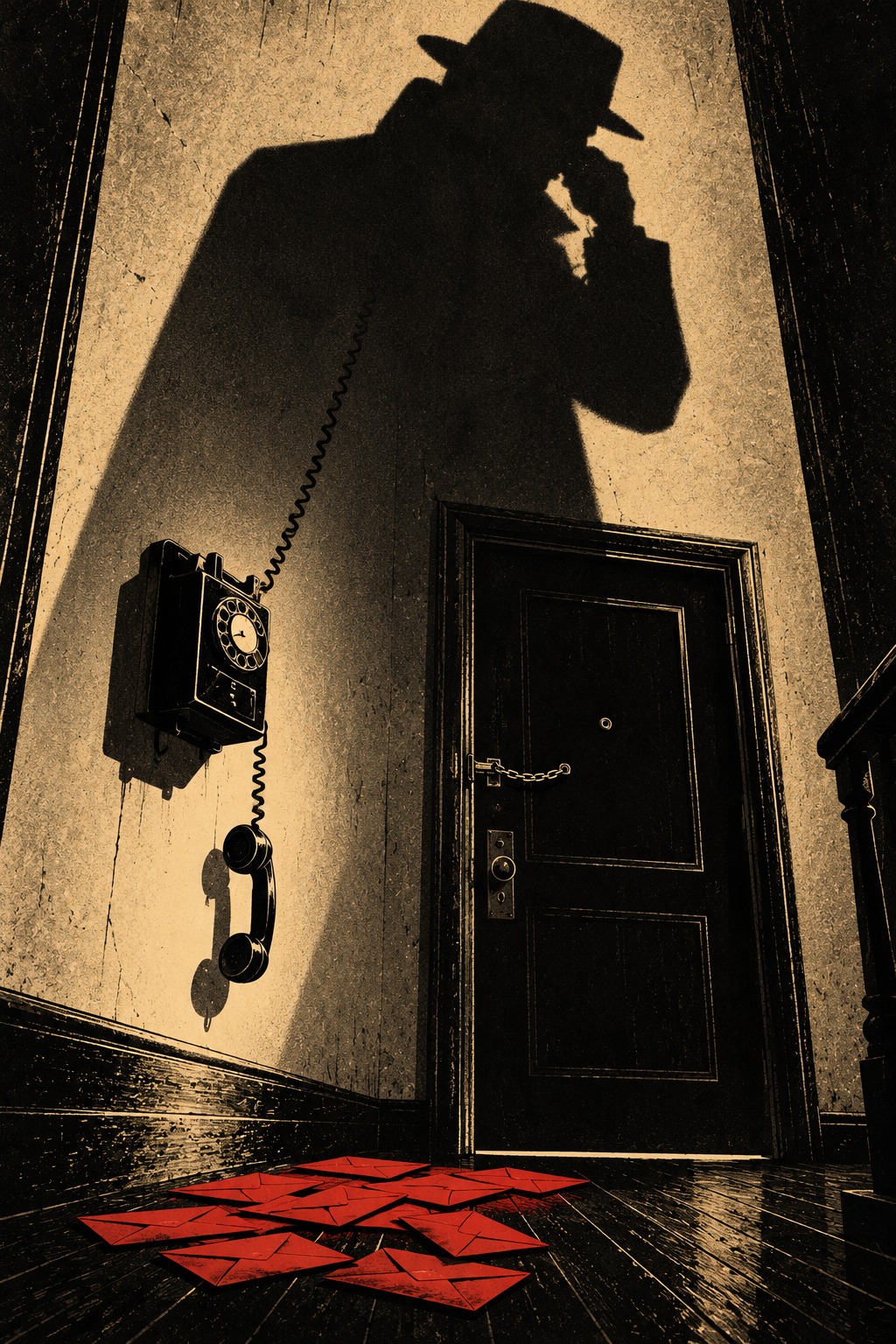
The flat was cheap, and the landlord had only one condition: the old telephone in the hallway stayed. It rang the first night, at nine exactly. A man's voice, calm and polite, asked: "Ana?" Mira told him he had the wrong number and hung up. The next night at nine it rang again, and the night after, and every night that week, always the same voice, always the same name. He never grew impatient and never asked anything else; he asked for Ana with the patience of someone who has all the time in the world. On the seventh night, tired and a little curious, Mira did not tell him he had the wrong number. "Speaking," she said. From the other end of the line came a long breath, like someone finally setting down a weight. "Then you got my letters," he said. The line went dead before she could ask which letters. She found them in the morning, in the mailbox down in the entrance, where a yellowed label still bore the name Ana. There were twelve envelopes in the same neat hand, one for every week, the first sent three months ago. Mira read them all that evening, in order, sitting on the floor beside the telephone. The first ones were tender, almost beautiful, the letters of a man who had not managed to say goodbye. He wrote to Ana about their mornings, about the coffee she drank without sugar, about the way she laughed when she thought no one was watching. Somewhere around the fourth, the tone began to change. "You left without a word," he wrote, and further down: "I know where you work now." In the seventh he had counted the windows of her floor. In the ninth he wrote that she had changed her mobile number, but that he still had the number of the flat, and that he would keep calling until she answered. Mira put the letter down and looked at the black telephone on the wall. The twelfth had only three lines. "You can change your number, Ana, but not your door. I'll be back on Friday. This time you will open it." Then Mira understood two things at once. Ana had not moved away; Ana had run from him. And she herself, with a single word said out of boredom, had just told him that Ana was still there. The landlord told her on the phone that Ana had left overnight, had paid three months' rent to break the lease, and had left no address. At the police station, a polite officer read the letters, handed them back and told her that until he actually did something, there was nothing they could do. She could spend Friday at a friend's, Mira thought, but then he would come back again, and again, and go looking for Ana somewhere else. So she stayed. On Thursday at nine the telephone rang, and she did not answer. On Friday at nine it did not ring. Instead, someone knocked at the door. Mira checked the chain and did not open the door. "Ana," said the voice on the other side, calm and polite as always. "Ana does not live here," said Mira. There was a silence so long that she could hear her own heart. "I know your voice," he said. "You do," said Mira. "I'm the one who answered. Ana never heard a single one of your calls. She has gone where your letters cannot reach her, and she asked that no one look for her." It was not true; Mira did not know where Ana had gone, or what she had asked. But it was the best lie she had ever told, and she told it for a woman she had never met. Behind the door there was not a sound. Then footsteps went down the stairs, slowly, one by one, until they could no longer be heard. Mira did not know whether he had believed her. She pulled the telephone cord out of the wall and let it hang like an unfinished sentence. In the morning she went down to the mailbox, peeled off the yellowed label with Ana's name, and wrote her own in its place. For the first time, the flat was hers.