Reading in English. Use the language switcher in the header to change.
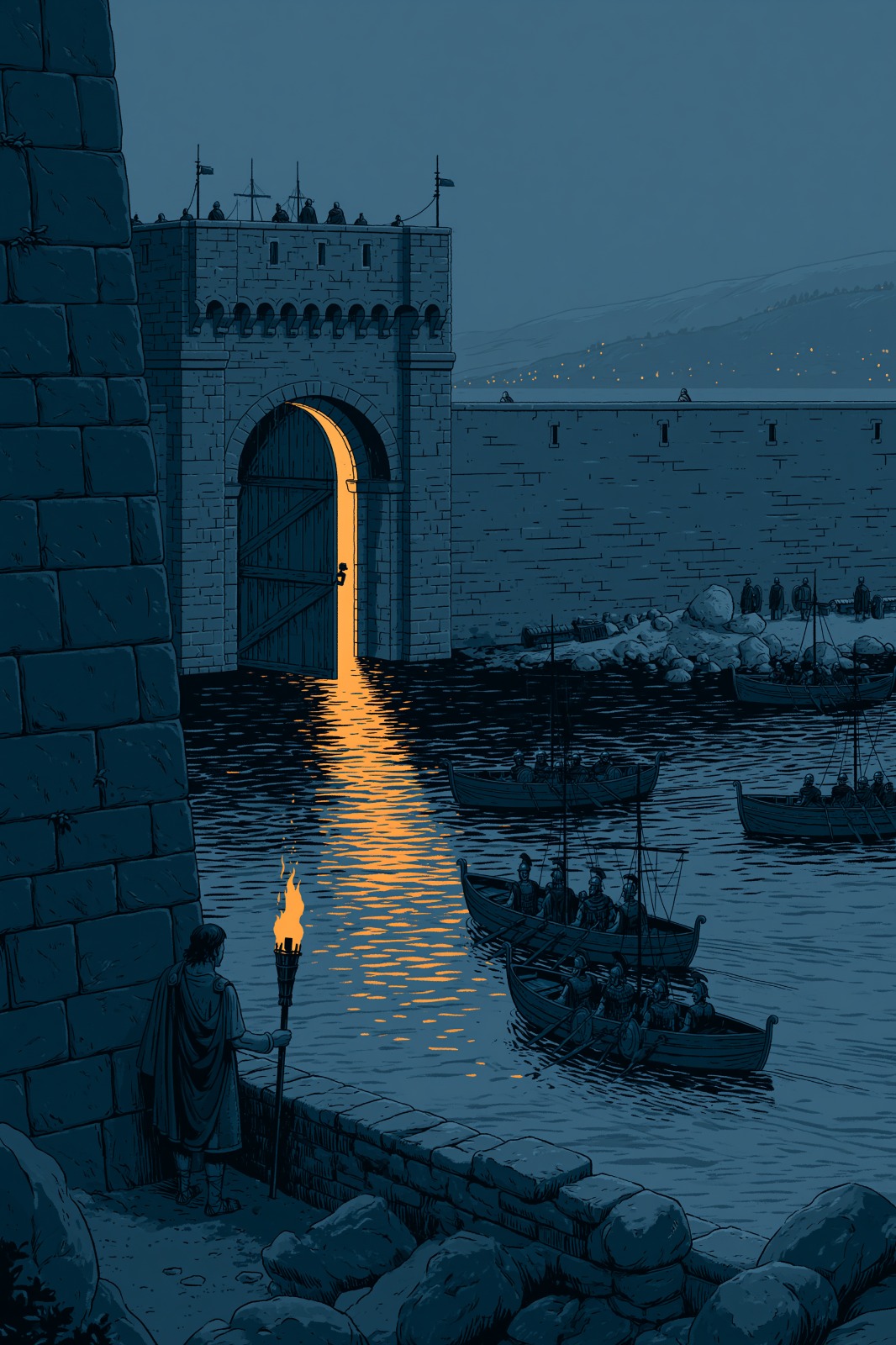
Demetrius of Pharos did not sleep the night he decided, though he prided himself on sleeping before battles. The Roman fleet had come over the horizon two days before, more ships than the island had ever seen, and they had come in no hurry, which frightened him more than haste would have. Haste is fear; patience is confidence, and the Romans were very patient. From the wall of Corcyra he had counted their masts until counting stopped comforting him. He knew the arithmetic of a siege the way he knew his own hands, and it was simple and bad. The queen was far to the north, pressed on her own coast; no relief would come in time, and his garrison was brave enough to die and too small to win. So the question was not whether Corcyra would fall, but who would be standing when it did. He told himself that first, because it was true, and because a true thing makes a good door for a false one to follow. He had sworn to Teuta and had meant it, and he turned the oath over now in the dark like a coin he was deciding whether to spend. An oath, he reasoned, is given to a cause that can keep you, and what is owed to a cause that is already losing? He thought of Pharos, his island, and of the long life he meant to live on it as more than a drowned hero in a queen's failed war. He thought too, for he was honest enough to admit it, of how generously Rome rewarded the men who were useful to it early. There is a kind of man who can persuade himself of anything that is also what he wants; Demetrius knew he was that kind, despised it a little, and did it anyway. In the small hours he sent a trusted man down the seaward wall with a folded message meant for the Roman flagship and no one else. Across the water it was carried to the consuls, and to the young tribune who had stood in Rhizon when this war was still only words. Servius read the Illyrian's terms over an officer's shoulder and felt his stomach turn even as his mind admired them. The ablest commander Illyria had was offering Rome the gate of Corcyra, the garrison, the harbor, and himself as a guide to every cove on the coast. It was a magnificent gift and a contemptible one, and Servius understood that the war was already over and the rest would only be its proving. The Romans did not gloat; they accepted the way a man accepts a tool handed to him handle-first. The night it happened, Demetrius walked the wall as if on his rounds, and the sentries thought nothing of a sleepless governor. He gave the orders that thinned the watch at the harbor gate, ordinary orders, each one defensible, each one a stitch pulled quietly from a net. When the Roman boats came in on the dark tide there was no alarm, because the men who should have raised it had been sent, by their own commander, to be elsewhere. The gate of Corcyra opened from the inside, quietly, the way the most important doors almost always do. There was a little fighting, from men who had not been told, and Demetrius regretted them in his way and did not let the regret slow him. By dawn the Roman standards stood on the walls he had been given to hold, and the keystone of Teuta's sea was the first stone of Rome's. Servius came ashore in the grey light and met the man whose letter he had read. He had expected a furtive creature and found a poised, courteous lord who spoke good Greek and better sense, and who carried himself not like a traitor but like a man who had read the weather and acted on it. That was the most unsettling thing of all; the betrayal wore no mark. Demetrius was not ashamed, or did not show it, and perhaps in his own accounting there was nothing to be ashamed of, only a debt moved from a failing house to a rising one. He had not loved Rome and did not love it now; he had loved his own future, and Rome was the road to it. Rome took the gift and the giver and made careful note of both. A man who opens one gate has shown the shape of his hinge, and the men who took Corcyra from him never once forgot how they had got it. They would use him, reward him, and watch him, in that order and all at once. Far to the north, when word reached Teuta that Corcyra had fallen without a real siege, she understood at once, because she had always known the price of trusting the cleverest man in the room. She had built her power on the sea and on the men who sailed it, and one of those men had carried the most important thing she owned across the water with a courteous bow. The gate Demetrius opened that night never truly closed again, and through it came not only a fleet but an idea, that the free sea had an inside, and that Rome now stood in it. Demetrius slept well the next night, they say, and that, more than the open gate, was the thing Servius would remember of him for the rest of his life.